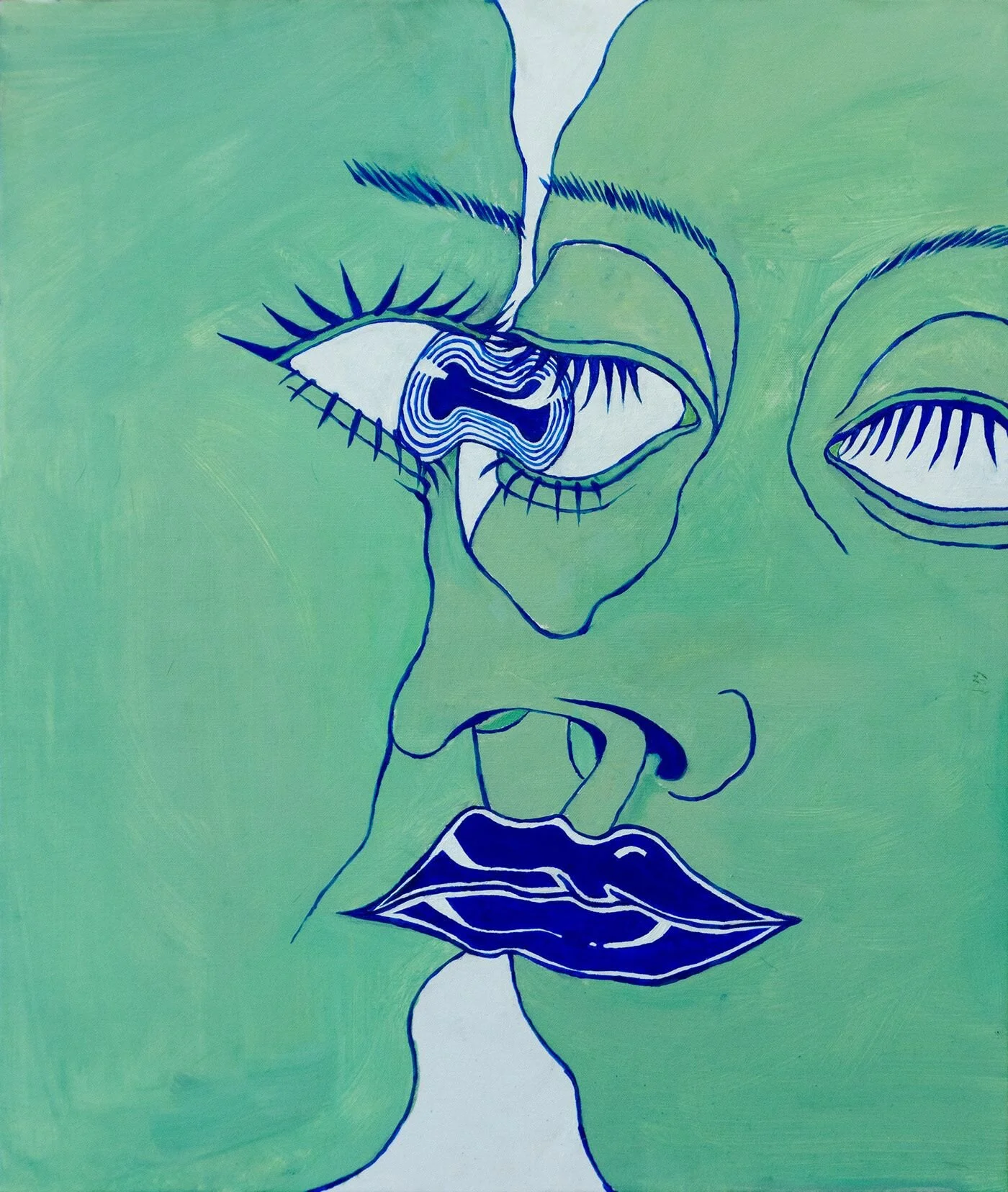
Being the parent of a child with special needs brings a particular set of challenges with it. There are the numerous doctors’ appointments, and specialists’ appointments, as well as trying to work “therapy” into everyday routines at home. Often, it seems like there isn’t enough time in the day, or the week, to get everything accomplished for my children that I’d like. This can be very frustrating, and it often makes me feel like a failure as a parent. But there is another, more insidious issue that can affect parents: the undiagnosed special need.
The doctor was a kindly older gentleman, with the white hair that inspires confidence in patients in hospitals the world over. He was in our room on the family floor of Northside Hospital in Atlanta, Georgia. I remember seeing his nametag as he walked through the door, but as the attending physician on the floor, I’d never seen him before, or would again, so I can’t remember what his nametag said. He’d come to us to deliver, what, in his mind, was tragic news. Our son, Timothy, less than a day old, had been diagnosed with Agenesis of the Corpus Callosum.
This COVID-19, this has changed everything. Nothing will be the same. When I’m suffocating in my own presence in my apartment I quietly gasp for clarity with these little Zoom calls, texts and Netflix viewing parties. I see all these beautiful pixelated faces. All these souls that I rather experience in person - a luxury that I can’t have. I patiently wait for them as their picture flickers on the screen and as the glitches finally sync their words with their mouth. I yearn for the familiar voice of those who know me best. It feels like most times my soul is trying to leap through the glass just to be with the ones I love. I feel foolish.
SPORK! Contributor Sarah Bowden brings her biographical (and autobiographical) spoken word masterpiece to Chicago stages again, as part of the 2020 Rhinofest.
I was born a stutterer, from a long line of family with a variety of speech “impediments”. Talk to a group of us at a family reunion and you too, will leave as a stutterer. My father, who stutters, had the foresight to insist that I attend speech therapy sessions. Twice a week, for nine years, I slipped out of class to sit for 30 minutes in a room a little larger than a broom closet, and practiced phonetic sounds in front of a mirror.
School was a horrendous experience. Teachers were hesitant to call on me, kids would constantly laugh and tease me. My parents, as parents were back then, were very practical. They had little patience for you feeling “sorry” for yourself. My dad often told me that life was seldom fair- in fact, fair has no real definition. And my mom, always to the point, told me to learn to deal with the cards I was dealt.
The play presents the scenario without comment, which can be infuriating from an audience perspective. To know something is amiss about these relationships, but finding validation nowhere can feel like gaslighting. However, directors Mary Kate Ashe and Aaron Sawyer pick up on the subtle creeping horror of modern heteronormativity and family bonds by employing two modes of communication and double casting.
I have tried to ease the sometimes confusing and daunting rules and regulations when traveling to Hawaii with one’s service dog. Hawaii has been, and continues to be very strict when allowing service dogs, and all pets, to travel to our islands as Hawaii does not have rabies and ticks that can cause Lyme disease. Understandably, the state wants to keep it that way!! Accordingly, there are several steps one must take well in advance when traveling to Paradise with their service animals. There are a few interrelated steps, so you may read a few points a couple times.
It’s an unfortunate reality, but having a physical or mental disability puts you at a financial disadvantage for the future. While there are some programs that provide aid to those who are differently-abled, like Medicare plans for individuals under 65 who receive Social Security disability benefits, they don’t cover every expense, and you aren’t able to receive assistance immediately. Fortunately, there are ways to plan for tomorrow, but you have to be willing to start today.
WARNING: CONTAINS SPOILERS TO A QUIET PLACE
Krasinski and his crew put a special emphasis on sound in A Quiet Place, working to capture the natural rush of waving corn stalks and the beat of strategic steps on soft earth. But the director plays with his audience as well, planting us in Regan’s perspective mere minutes into the film. As the family treks home from the pharmacy, the soundtrack drops out, leaving behind only a microphone hum, and we experience Regan’s hearing loss for ourselves. It is peaceful. We are reoriented to the visual cues surrounding her, to the attention she gives her parents, to the beauty of the rural landscape. But we also see a danger she did not anticipate, simply because it is happening behind her back.
Art therapy is a soothing and effective form of treatment because individuals are able to use creativity and imagination to express themselves. The central focus of Art Therapy is to expand forms of communication to better see experiences in a different light.
This type of therapy is especially helpful for people who have had traumatic psychological issues and after art therapy they can look back on a situation from a different perspective that provides empowerment and optimism.