Friends sometimes ask how my spouse or I are adjusting to my recent neurological diagnosis. It's unusual that someone asks how the changes have affected my immediate family, even though it has caused a massive rewrite of our collective past. So many times before my behavior was described as “difficult” or “frustrating” and needs to be changed to “struggling.” We realize kids born in the 80’s were rarely diagnosed with Sensory Processing Disorder prior to adulthood. Still, it’s hard not to wonder how my life might be different if I had started therapy a few decades earlier.
It’s a rare, powerful thing to experience an authentic difference in ability in the titular Richard, or to see the disparaging remarks levied on him by friends and enemies directed to an actor that may have a passing familiarity. Rare and powerful is exactly how I’d describe The Gift Theatre’s “Richard III”. This production does more than entertain, it empowers us to demand more representation of long under-represented artists from the theater we see.
The physician's cure for this “slight hysterical tendency” was rest, fresh air and absolutely no work or social gatherings. It is clear as the story progresses what harm this isolation does to the main character. By the end of the story the woman does not want to leave the room that has been enlisted for her rest and envisions herself as a part of the rooms yellow wallpaper – the only stimulus in her secluded world.
Once in a great while, a stage production makes a fantastic impression and the daunting work behind it seems almost effortless. Goodman Theatre’s “The Matchmaker” is charming, delightful and homespun, but for a comedy penned in the 1950’s, this particular telling has a remarkable 2016-era social consciousness. This “Matchmaker” features a cast that is diverse in age, gender, ethnicity and ability, and takes a certain delight in creating an ensemble that is unique and unlikely.
In the last decade, more so even in the last five or six years, mental health and disability visibility has been gaining momentum. Despite this, access to quality care and health resources is still a challenge, especially for those of low incomes and on college campuses. This isn’t news. But for many colleges, I feel as though mental health awareness has become a sort of trend. It’s easy to make posters and signs and organize events, but not so easy to actually create an environment without stigma, and with quality resources. Taking the time to do this is worth it, and the students will thank you.
You grew up going to hospitals. Not because you had appointments, but because I did. So you began to hate hospitals and going to them. But that hasn’t stopped you from visiting me when I’m in the hospital. Every single hospitalization you’ve come to visit me. To put your arms around me and give me a hug. To distract me for a precious few hours, hours that always seemed to pass too fast. Thank you for bringing sunshine into my hospital room. For taking my mind off of what was going on around me.
Indeed, such experiences enabled me to better understand what exactly awareness entails. There exist so many different flavors, each appropriate for a different situation. Knowing what corresponds to a given mental disorder differs significantly from reading a personal blog or watching videos of the interactions between doctors, patients, and their families; and these video and Internet interactions, like talking to someone on Skype versus in real life, are still a far cry from actually being there.
But what made her reminder even more poignant was that she had the courage to make a joke about something serious. That’s just one of the reasons I love Eric Emanuelson. She is one of my only friends who has the courage to joke around with me about my medical equipment, diagnoses, and medications.
I try to keep company with people that are aware that they are crazy, because I don’t have qualms with admitting that I am, too. But more importantly than self-awareness, I look for the person that cares how their crazy effects the people around them, and persistently ventures to build a healthier way of being.
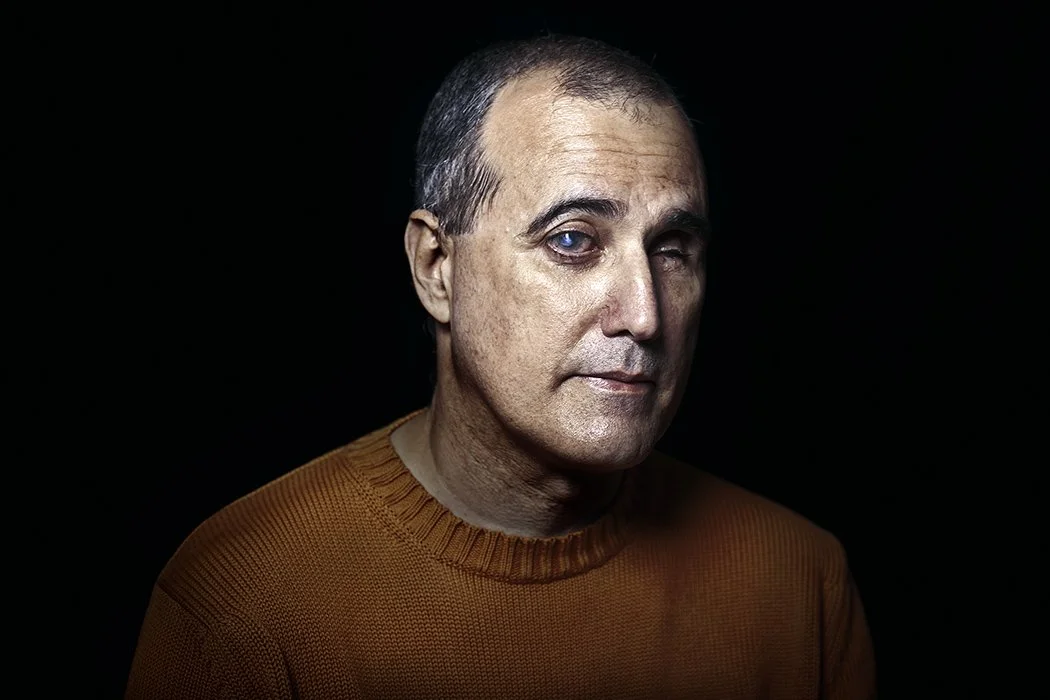
I thought about all the different people I learned about growing up and the differently able community was the only group left out. Growing up black, I know what it's like to be different. I know what it's like for people to look at you weird on public transportation or for people to talk to you like they’ve never been around “your type” before. That happens when a person really isn’t educated about a certain community. As a kid I was never really taught about blindness and how it affects a person.